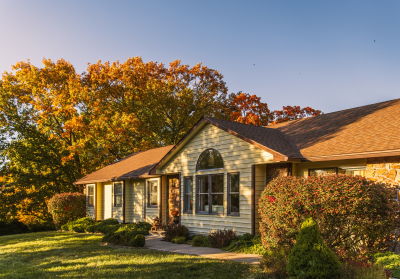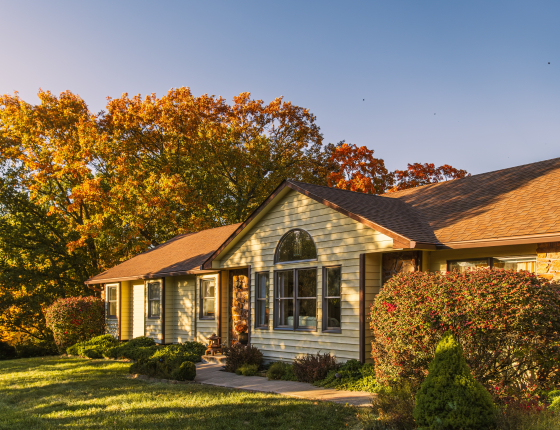
When the Tudor charm meets energy efficiency
Tudor-style homes are popular in the Twin Cities metro. They’re widely known for their striking looks, with steep roofs and asymmetry. From the street, many may look the same, but inside is a different story.
Typically, these homes were built in the 1920s and 1930s. While this age leads to a lot of charming features, which homeowners love, it can conceal some potential energy efficiency concerns. In this article, we compare two Tudors to understand the impact energy efficiency can have on two similar homes.
Comparing two South Minneapolis homes
To most accurately compare the effects of energy efficiency on a home, we chose two similar homes. Both are in South Minneapolis and are the same size with the same number of bedrooms and bathrooms. Many things about the two are the same. The primary differences are in the energy efficiency projects the previous owners completed.
In a house in the Standish neighborhood, the walls and attic have been insulated, the home has been air sealed, and the owners installed a high-efficiency HVAC system. A home in the Ericsson neighborhood, on the other hand, lacks sufficient air sealing and attic insulation and heats using a 70-year-old boiler.
Daily life in the Tudor homes
Day-to-day life in the Standish home is generally more predictable. The occupants are comfortable, with minimal drafts or hot spots, and their bills are reasonable and consistent. Their home is a bit quieter, and they can rest easy knowing that their major efficiency projects are complete and their home is resilient and sustainable.
Life in the Ericsson home is more challenging. Because it lacks basic energy efficiency improvements, the house has large temperature swings between rooms, and there are more drafts. The home experiences ice dams in winter; the occupants can hear more noise; the energy bills are larger and fluctuate more throughout the year.
Solving comfort concerns with energy efficient home updates
Nationally, about 40% of the average home’s energy use goes toward heating. In Minnesota, this percentage increases to an estimated 70%. With so much energy going toward it, homeowners benefit from maximizing that energy use.
When heat moves from warm areas to cooler ones, it’s important for homeowners to do what they can to prevent heat loss in Minnesota’s climate. In most homes, weatherizing the home is the solution to this problem.
Weatherization is the process of ensuring a building can withstand the elements, effectively sealing the inside of the building against outside conditions. Usually, this involves a combination of wall insulation, attic insulation, air sealing, and ensuring openings like windows and doors are in good shape, sealed, and fit their frames well.
What homeowners lose without energy efficient updates
Homes in Minneapolis, especially older ones, are more likely to lack these efficiency upgrades. An estimated quarter of homes in Minneapolis have insufficient wall insulation, about 40% have inefficient heating systems, and nearly 70% of homes have insufficient attic insulation and air sealing. The impact can be felt in utility bills, comfort, and resale value.
When comparing the energy bills of the two homes, the occupants in Ericsson pay an average of $900 more per year on energy. Given the median homeownership cycle of 12 years, that’s over $10,000 in extra bills compared to the occupants of the Standish home. This is because the Ericsson house is less insulated, so warm air escapes in the winter and enters the home in the summer. This changes the temperatures in the home and makes the heating and cooling systems work harder to maintain the set temperature. The heating system is also inefficient, so more energy is wasted. This increases bills and wear and tear on the systems.
Making energy efficiency improvements usually costs homeowners under $10,000 and the impact is immediate. After weatherizing, many households experience up to 40% in annual bill savings. When comparing $10,000 in wasted energy to $10,000 in upgrades that increase the value of the home, many homeowners find weatherization to be well worth the cost.
How efficiency can help sell homes
In real estate, weatherized homes and homes with highly efficient mechanical systems are valued. Those homes are more comfortable, affordable to heat and cool, resilient, and sustainable, while also mitigating future costs. If a heating system is relatively new and insulation projects have been completed, future homeowners can focus their attention elsewhere.
In one case study, a Minneapolis home with energy efficiency features received more offers at a higher price for a quicker sale, demonstrating the value Twin Cities buyers place on efficiency. However, energy efficiency will only help your sellers get a higher price on their home if the features are highlighted.
Talking to buyers about energy efficiency
As a real estate agent, understanding energy efficiency will help you communicate its value to prospective buyers. As an experienced energy efficiency nonprofit, CEE has found that sharing educational information on energy efficiency features helps residents connect their daily lives to efficiency projects.
Homebuyers, especially first-time homebuyers, may not understand the impact of energy efficiency projects on their energy bills, comfort, resilience, and sustainability. Taking time to explain these features can help homebuyers understand the benefits they would get from purchasing a home with these features.
Use your clients’ energy disclosure reports
Energy disclosure reports, which are required in Minneapolis and Bloomington as part of their Truth in Sale of Housing (TISH) or Time of Sale (TOS) reports, respectively, can help you understand a home’s energy efficiency features and their impacts.
When sellers complete their mandatory pre-sale inspections, evaluators in both Minneapolis and Bloomington collect additional energy efficiency data on the home. That information is used to generate an energy disclosure report, which is included in the final TISH or TOS report.
Features that may be highlighted include:
Type and amount of attic and wall insulation
Type and age of heating and cooling systems
Type and age of water heater
Number of single-pane windows without storm windows
Homes are given a score out of 100, which can help prospective buyers understand the home’s efficiency. Opportunities for additional energy-saving projects are also outlined, free follow-up project guidance is available to all new buyers, and rebates may be available to lower project costs.
These reports must be displayed at all showings, but the information in the reports, when shared with prospective buyers, can also help show the value and importance of the upgrades that have been made.
Better efficiency, better outcomes for homeowners
Energy efficiency can help your clients. Whether you’re supporting sellers or buyers, identifying efficiency features can help your clients get a deal they’re happy with. In Minneapolis and Bloomington, mandatory energy disclosure reports can help get sellers a higher price or reassure buyers that their new home will be comfortable for decades to come. You can find more information on energy disclosure for real estate agents and clients on the energy disclosure website.
If your clients live outside of Minneapolis and Bloomington, consider gifting them a home energy audit. These audits, provided by CenterPoint Energy and Xcel Energy through the Home Energy Squad® program, will identify similar energy efficiency features and projects as an energy disclosure report.