On Wednesday, October 7, Minnesota’s Efficient Technology Accelerator* (ETA) hosted its second annual forum for a packed room of policy and regulatory stakeholders, energy efficiency professionals, utility representatives, and more. This year’s forum centered on the topic of affordability, flexibility, and decarbonization through dual fuel technologies, an issue of some contention in conversations around clean energy. Panelists did not shy away from this tension, but addressed it head on. As Josh Quinnell, PhD, senior research scientist at CEE, put it in his presentation: the dual fuel approach is not backsliding. In fact, the research proves time and again that it presents the best path forward for decarbonizing Minnesota’s single-family buildings, lowering costs and emissions while increasing reliability for residents.
ETA program staff were honored to welcome a roster of industry-leading presenters to discuss the notion of advancing decarbonization through dual fuel technologies. This included keynote speaker John Taylor, executive director of the Consortium for Energy Efficiency, Commissioner Hwikwon Ham from the Minnesota Public Utilities Commission (PUC), Josh Quinnell, as stated, Becky Walker, chief program officer of the Northwest Energy Efficiency Alliance (NEEA), and Jerry Joseph, executive director of customer experience at Énergir. Presenters covered Minnesota’s cold climate, energy grid, and building stock, as well as parallels to be found in neighboring regions like the Pacific Northwest and Québec.
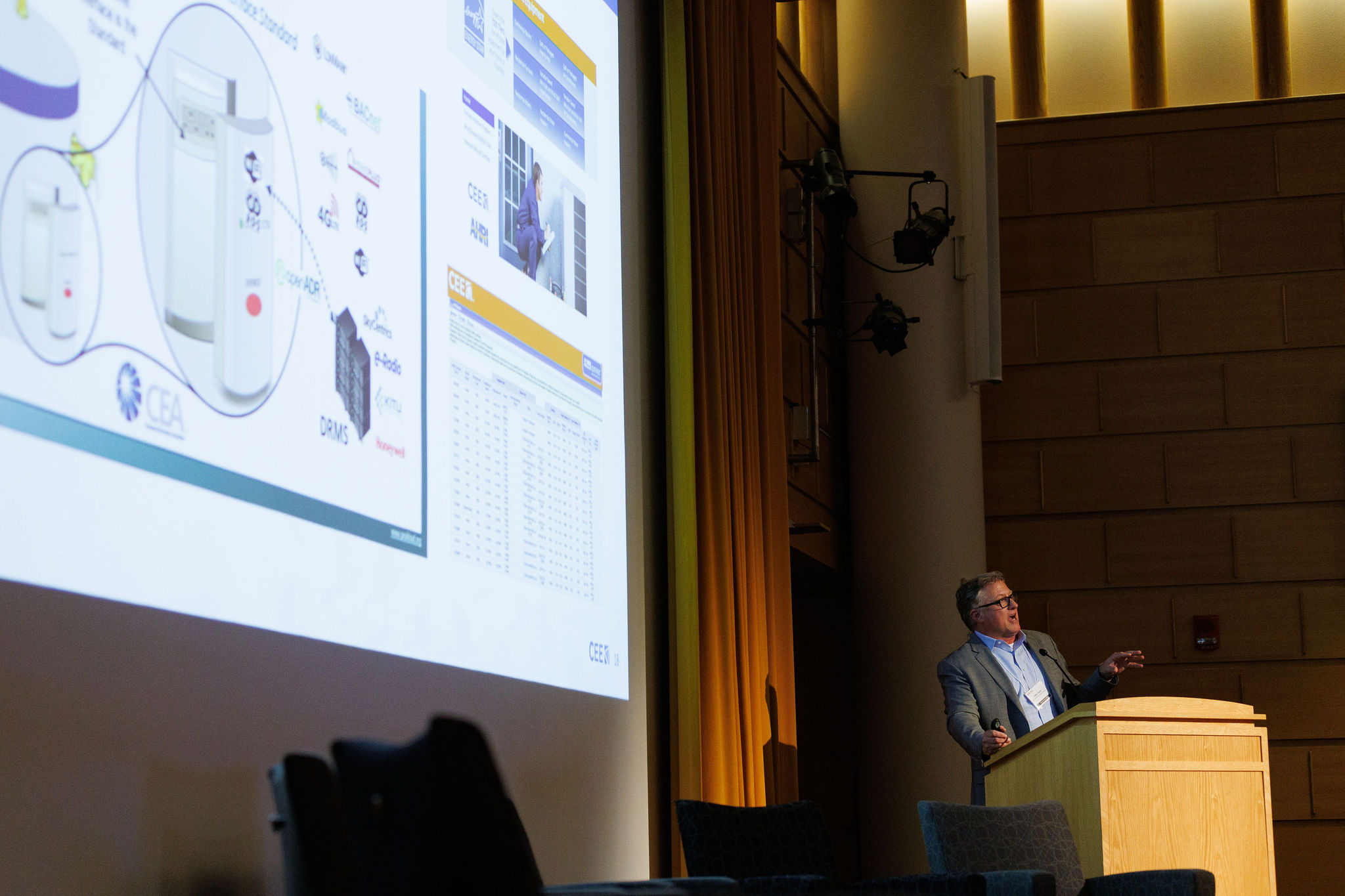
Opening the forum, keynote speaker John Taylor discussed how the Consortium for Energy Efficiency’s work across North America has allowed the organization to identify patterns across this territory. To scale capabilities for automated demand response and flexibility and advance decarbonization efforts, electrification must be handled responsibly and efficiently. Otherwise, new problems arise in the form of strained energy grids and threats to affordability for ratepayers. John emphasized that open standards and coordination across industries are key to effectively integrating dual fuel technologies in buildings. There are many silos in the energy world — to make meaningful progress, our industry must coordinate across these silos, seek out diverse funding pathways, and set forth a coordinated approach with strong information sharing.
Next, Commissioner Hwikwon Ham provided his own insight into the question of whether dual fuel and load flexible technology maintain reliability and affordability without massive electrical grid overbuilding. All-electric systems are often cost-prohibitive for the average ratepayer. Moreover, a rapid and unplanned conversion to all-electric systems in the building stock can lead to a greater winter peak penalty, transformer overloads, and generation gaps across the system. Hwikwon stated that the regulatory framework needs to adapt to encourage and incentivize a dual fuel approach and emphasize coordination between electric and gas utilities.
Josh Quinnell, PhD, anchored these points with key findings from his and the CEE research team’s extensive work exploring these questions. Josh walked the audience through different modeled scenarios and their projected consequences as the state seeks to electrify and decarbonize the single-family building stock. Most of these scenarios would be insufficient to handle the winter peak. Weatherization is necessary, but it alone will not meet the peak. Building out a mammoth electrical grid sounds encouraging in theory, but firm capacity would most likely require large gas turbines — heat pumps served by gas turbines on the electrical grid produce more emissions than traditional carbon-fired heating in homes. Josh expressed optimism and confidence in the solution to these shortcomings: effective dual fuel technology. By keeping some gas for backup heating on the coldest days of the year, the state can shave off the winter peak and individual households can hedge an unknown future spark gap, the difference between the cost of gas fuel versus electricity, by maintaining 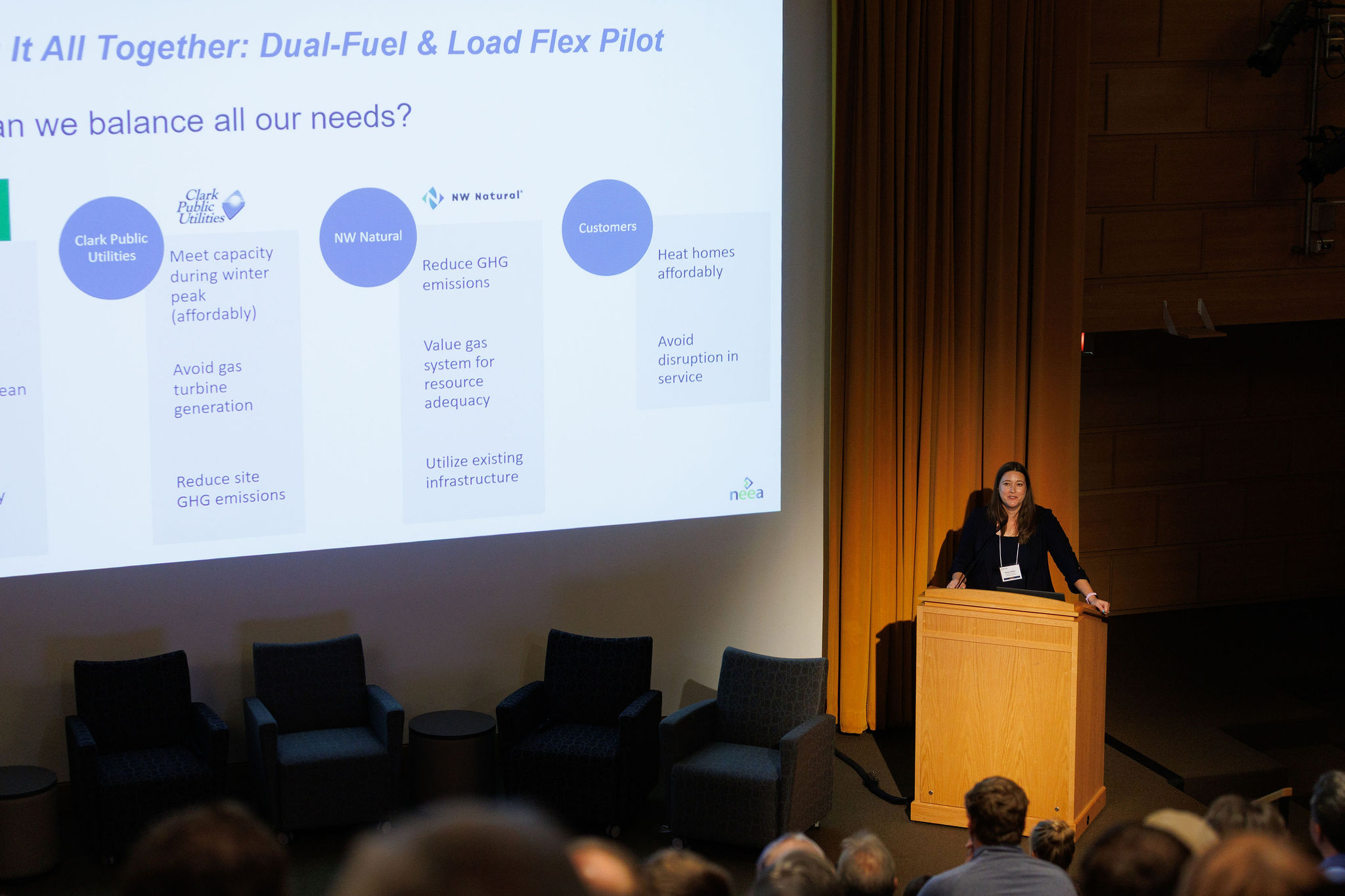 a diversity of energy sources. Minnesota already excels at demand response, and the upsides to dual fuel demand response only improve over time as we build out the grid to support it.
While not quite as cold as Minnesota, NEEA’s territory in the Pacific Northwest is facing similar challenges as they evolve their energy system. Becky Walker explained that the robust hydro system that has powered the region for many years will no longer be able to keep pace with the doubled capacity needs the region will have in the coming decades. Peaks in meeting the system’s electrical load are becoming more frequent. NEEA has been working to build a portfolio of load-flexible resources by increasing product availability and ensuring interconnectedness. Becky detailed the successes of a dual fuel and load flexible pilot project carried out by NEEA, which proved that a system can be modulated seamlessly between gas and electric with little impact on customers, while relieving stress on legacy grid infrastructures.
Up in Québec, enormous progress has been made in a system-wide dual fuel approach, a program that began when this pathway was little more than a novelty in energy conversations. Jerry Joseph of Énergir, the largest natural gas distributor in Québec, explained how, in 2019, the company pooled efforts with Hydro-Québec, the public electric utility, on a shared solution to meet the province’s electrification push. This coordination occurs behind the scenes, taking the burden off residents to navigate a complex dual fuel system. These new dual fuel systems were also subsidized by the government and given a preferential electric rate, conversion grants, and guided implementation by trusted contractors and engineers, leading to widespread beneficial adoption. The cooperative effort built long-term viability in this approach through funding and partner support and worked extensively with contractors and engineers to boost their capabilities in handling dual fuel upgrades and effective installations. This unique and groundbreaking work successfully threaded the needle between minimizing costs, building out a more resilient energy system, and making significant gains in decarbonization throughout the province.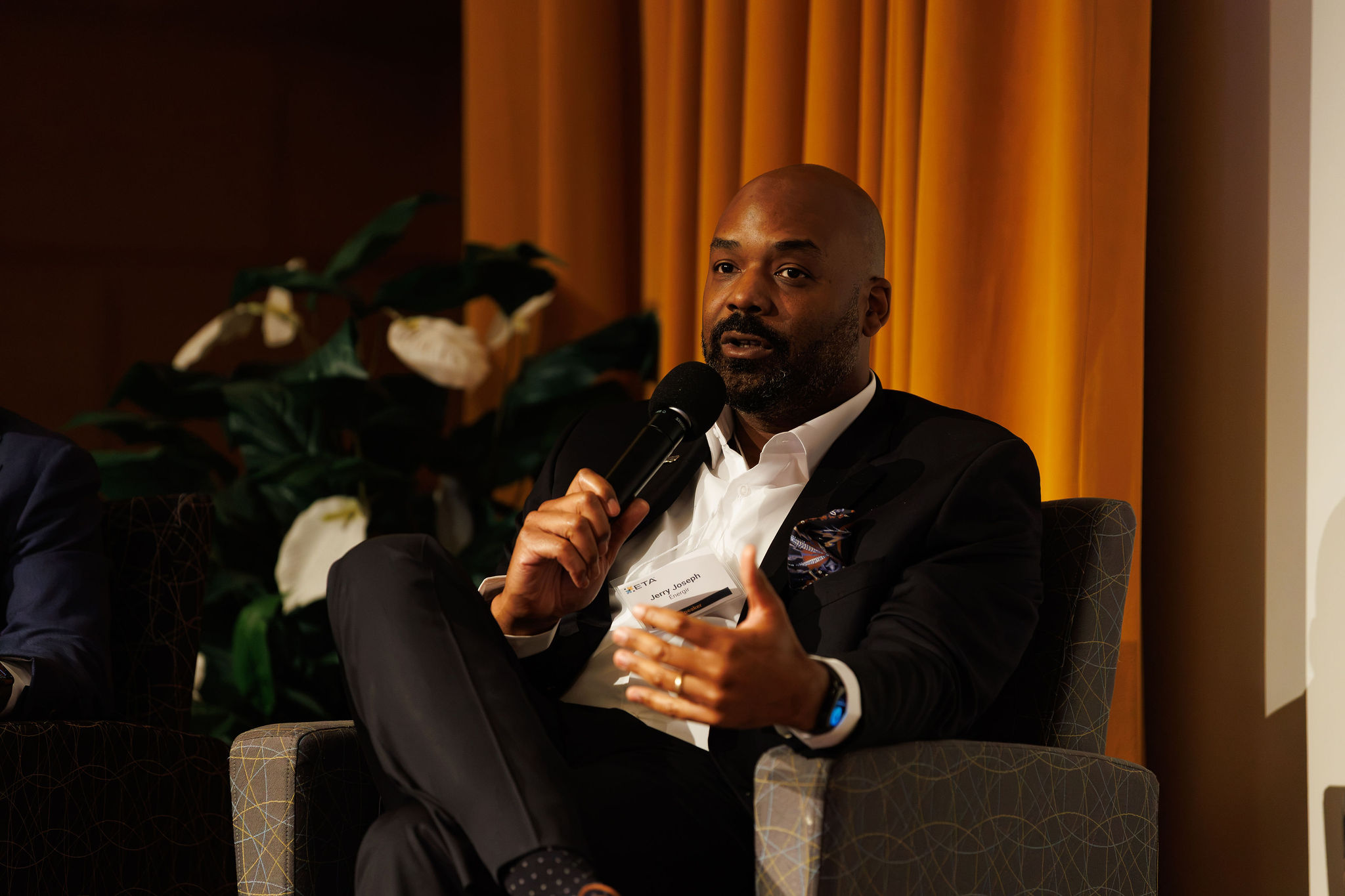
Jerry’s closing sentiment was echoed in the concluding panel conversation between the forum presenters: “The right energy, at the right place, at the right time, and at the best price.” A dual fuel approach is not a means to stave off or discourage electrification. The value of different fuel sources and aging legacy infrastructure will need to evolve as North America’s capacity requirements continue to grow and residents seek assurances on affordability and reliability. A strategic, integrated, and highly collaborative process will be fundamental, uniting efforts between policymakers, utilities, manufacturers, contractors, engineers, energy efficiency workers, and clean energy advocates. This ethos is at the core of Minnesota’s Efficient Technology Accelerator and the technology focuses within each of its initiatives. We were inspired by this year’s forum presentations and look forward to more opportunities to convene and collaborate with those who are shaping the future of energy.
Learn more about Minnesota's Efficient Technology Accelerator
*Minnesota’s Efficient Technology Accelerator is a partnership funded by the state’s participating investor-owned utilities (IOUs) and consumer owned utilities (COUs), administered by the Minnesota Department of Commerce, Division of Energy Resources (DER), and implemented by Center for Energy and Environment (CEE).