Is Your HVAC system overdue for a tune-up?
When was the last time you changed your furnace filter? What about having your heating system cleaned and tuned? If you don’t know (or if it’s been a while), consider this your reminder to create and follow a home maintenance checklist. Then consider refreshing other systems in your home, like your ventilation fans and dryer ducts. Proper care and maintenance of your heating and cooling systems can extend their lifespans while helping you monitor any areas of concern, like upcoming repairs or replacements.
A home maintenance checklist for optimal performance
To maintain the function of your mechanical appliances, whole home ventilation, and health and safety measures in your home, there are several seasonal maintenance tasks we recommend you complete.
HVAC maintenance tasks
An annual HVAC tune-up and professional inspection of your mechanical systems by a technician is one of the best ways to ensure your system is safe and functional. Typically, we recommend having each system maintained before you start using it for the season: check your heating system in the early fall and check your cooling system in the late spring.
When doing a clean and tune on your furnace or boiler, the technician will clean any soot from the burners, clean the blower fan if you have a furnace, check safety features, and conduct combustion safety testing to ensure that any gases the system produces are exhausting safely out of your home.
What about your AC or heat pump?
You should also have an air conditioning inspection completed in the opposite season to complete similar checks and maintenance. This can be done by the same HVAC technicians who check your heating system.
If you have another kind of system, like an air source heat pump, you can contact your installer or the system manufacturer to see what maintenance schedule is recommended.
Between annual HVAC tune-ups, you can add some DIY tasks to your home maintenance checklist to keep your systems working at their best.
Add these DIY tasks to your checklist
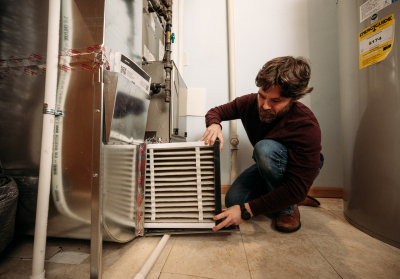
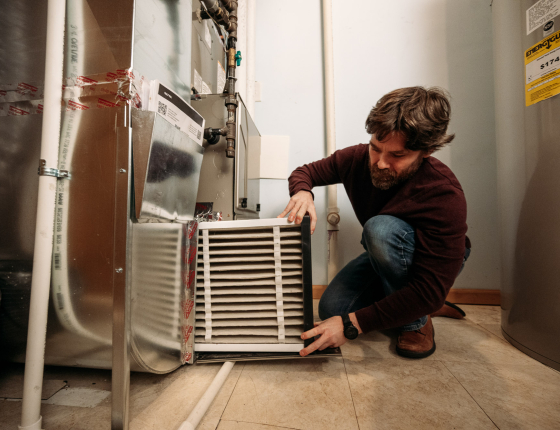
One of the most impactful DIY projects you can do is to replace your furnace filter regularly.
Filter replacement is one of the simplest ways to keep your system running well.
Timing varies by filter type:
If your furnace uses a one-inch filter, it should be replaced every one to three months, depending on your allergies, if you have pets, and other factors.
If your furnace has a four-inch filter, it should be replaced every six to 12 months, accounting for the same factors.
Regular filter replacement allows air to flow better through the furnace, so your system doesn’t have to work as hard to maintain your preferred temperature.
Caring for your outdoor AC condenser
Keeping your condenser clean and clear helps it run efficiently and last longer.
Try these steps:
If you have a central AC system, add a piece of plywood on top of the outdoor AC condenser after the cooling season to protect the fan from any ice damage.
Before and after the cooling season, another good practice is to use a stiff bristle brush to remove any dirt and debris from the AC condenser and protect the condenser coil. Removing debris will ensure that the AC is running efficiently and maintains its cooling ability, while extending the lifespan of the system.
You can also use a hose to rinse off the fan blades for additional cleaning.
Additionally, keep plants two or three feet away from your AC condenser to ensure it has sufficient airflow.
Air exchangers
Air exchangers use fans and motors to remove stale air from the home and draw in fresh air from outside. When maintained and functioning property, air exchangers keep your home ventilated and maintain indoor air quality. If you have one of these systems, follow the maintenance instructions on the unit to extend the system’s lifespan.
If your home has an HRV or ERV, add these tasks to your list:
Twice a year, clean the diamond exchanger section of the system, and seasonally clean or replace the two filters on the exchanger.
Check your specific system to determine if the filters are reusable or require a replacement.
If you notice moisture issues in your home even after seasonal filter cleaning, work with an HVAC contractor to assess any potential issues.
If you have no concerns, you only need to have it checked and tuned every couple of years.
Ventilation systems
In many homes, bath fans or kitchen exhaust fans provide additional ventilation, but can get dusty or grimy quickly, so regular cleaning is recommended.
Bath fan cleaning
Your ventilation fans are another easy DIY target.
Here's how to clean a bath fan safely:
To clean a continuous or non-continuous bath fan, switch off the fan’s electricity at the electrical panel.
If this is not an option, pull the fan cover down and check to see if your fan wiring can be disconnected within the fan.
Once the power supply has been cut off and the cover is off, use a vacuum to clear the fan of debris.
Depending on the debris, you may also want to take a damp cloth to get all the dust.
Kitchen Fan Cleaning
There are various types of kitchen fans. Some have filters that need to be scrubbed, and others have blades that will need some cleaning. This will help the fan exhaust air more effectively and run quieter.
Clothes dryers
The ductwork of your clothes dryer is another area that benefits from annual cleaning. First, clear out any lint from the dryer exhaust vent on the exterior of your home. Next, disconnect the dryer from its power source, detach the ductwork from the dryer, and use a vacuum cleaner to remove lint from the ducting.
If your dryer ductwork is flexible, it is best to replace that with rigid, or smooth, ductwork, because lint can get caught in the small ridges of flexible ducting, which can lengthen drying cycles and pose a fire risk.
Your year-round home maintenance checklist
Home maintenance checklists are impactful ways to extend the lifespan of your systems while also improving your own quality of life. In Minnesota, many of these tasks are seasonal based on the systems you’re using most often. Once you complete these tasks, you may want to move on to more energy efficiency specific tasks to keep your energy use and bills low. You can do specific summer maintenance while it’s warm, then switch to winter maintenance tasks when the weather starts to cool.