This post complements our quarterly research newsletter, which features updates on CEE's research projects. Sign up to get this information in your inbox.
Beneficial electrification for better barns
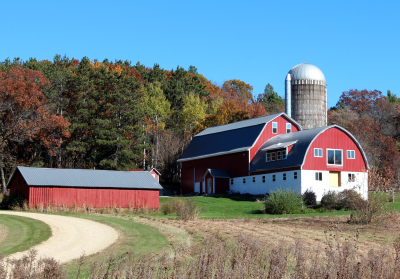
Background: 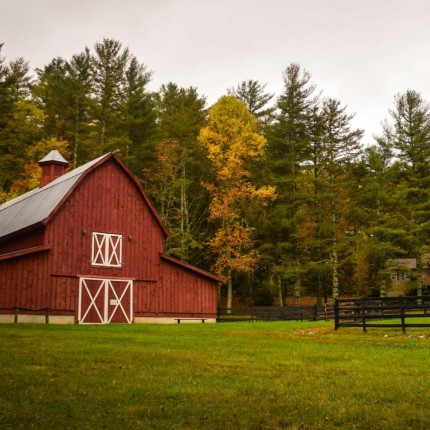 This market study will estimate the potential benefits of using heat pumps to heat, cool, or produce hot water in dairy, swine, and turkey farms in Minnesota. The project team will engage livestock farmers and heat pump manufacturers to identify opportunities and barriers for realizing efficient fuel-switching measures. These findings will be leveraged to create a roadmap for capturing heating and cooling savings in these promising applications.
Update: The project team is seeking dairy, swine, and turkey farms for site recruitment. Farmers who share their experience for this work will help utilities find new ways to improve energy efficiency, develop beneficial rebate programs, and reduce energy costs for livestock agriculture. Participation will include a brief tour of farm buildings, followed by a 45–60 minute interview. Participants will receive a $400 gift card.
This project is supported in whole by a grant from the Minnesota Department of Commerce, Division of Energy Resources through the Conservation Applied Research and Development (CARD) program.
Heating load estimates and duct performance diagnostics
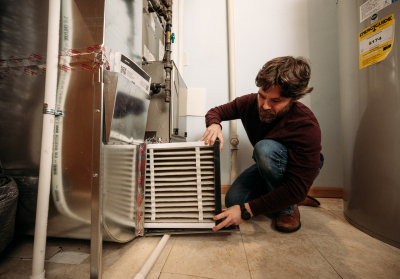
Background: 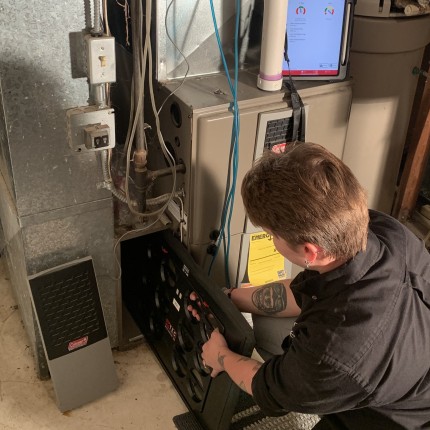 Retrofit air source heat pumps (ASHPs) and duct systems must be properly sized to reduce energy costs and carbon emissions. This project will conduct load calculations and duct performance measurements in out-state 1–4 unit residences, complementing the results of a current Twin Cities study. The results will inform recommendations for load-estimating methods for homeowners, auditors, and contractors. They will also determine how often existing ducts can accommodate larger-capacity ASHPs with or without weatherization and duct improvements.
Update: The project is in the recruitment phase, with incentives available for accepted participants. Eligible homes will be single-family detached homes located in Greater Minnesota, outside the Twin Cities, with a centrally ducted furnace or heat pump. Participation will involve a three to four hour site visit, blower door house air leakage test, and access to key household rooms for calculations. Participants will receive a $100 cash incentive, Manual J report with load estimates, and duct performance information. This work will help determine whether the existing central air duct in a participant’s home can accommodate the new system without duct system or envelope improvements or a back-up system.
Evaluating retention of existing radiator distribution systems
Background: 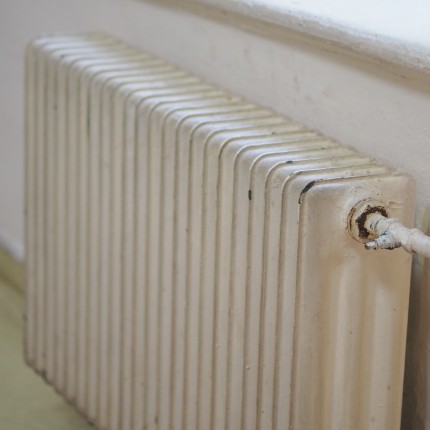 Homes that are heated using boilers and radiators pose a challenge for electrification efforts. Current electrification work for these homes typically includes costly forced-air conversions. This project focuses on the compatibility of air-to-water heat pumps (AWHPs) as a competitive technology that can significantly benefit lower-income communities seeking to electrify boiler-heated homes. The project team will evaluate the potential to retain existing radiators for use with electrified AWHP systems by characterizing the relationship between their heating load and the designed capacity of their heat emitters.
Update: Any occupants of residential buildings in Minnesota, including renters and homeowners, may be eligible to participate in this study. Participating homes must use boilers and radiators as their primary heating source that is not shared with other units. The team will provide each participant with an evaluation of their existing heating system to determine whether AWHPs are a competitive option for their home compared to more common heat pump options, in addition to a $100 gift card per visit per home. Prospective applicants must submit a brief survey to determine eligibility.
This project is supported in whole by a grant from the Minnesota Department of Commerce, Division of Energy Resources through the Conservation Applied Research and Development (CARD) program.
2026 ETA Forum: The case for dual fuel
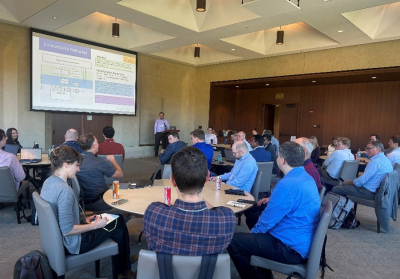
Update: 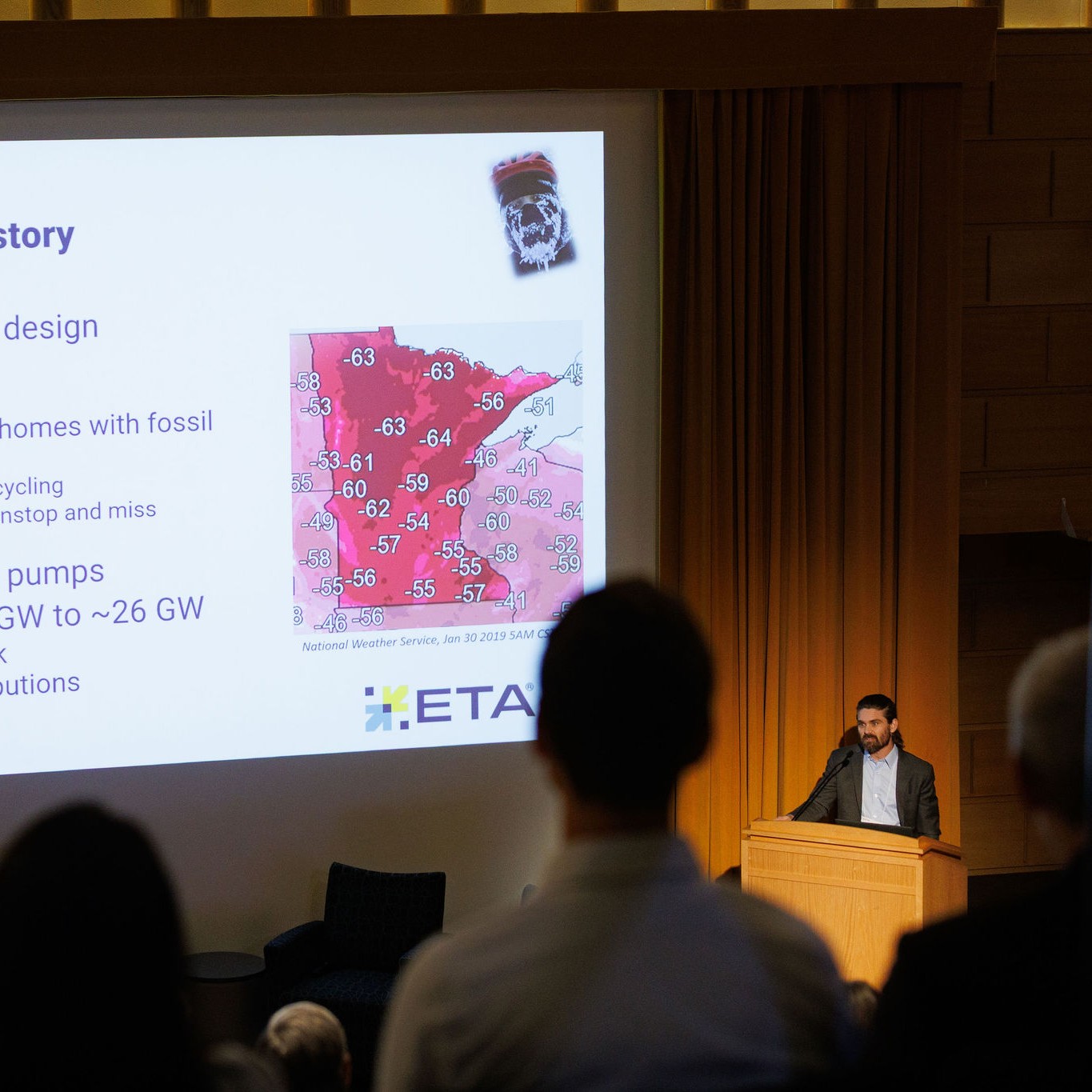 On Wednesday, October 7, Minnesota’s Efficient Technology Accelerator (ETA) hosted its second annual forum for a packed room of policy and regulatory stakeholders, energy efficiency professionals, and more. This year’s forum centered on the topic of affordability, flexibility, and decarbonization through dual fuel technologies. Featured presentations included speakers from the Consortium for Energy Efficiency, the MN Public Utilities Commission, Northwest Energy Efficiency Alliance, Énergir, and CEE’s own Josh Quinnell, a senior research scientist who anchored the forum with key findings on how dual fuel technologies can help shave off winter peak penalties in cold climates and help individual households hedge an unknown future spark gap by maintaining a diversity of energy sources. The ETA Forum demonstrated that a strategic, integrated, and highly collaborative process will be fundamental to meeting North America’s growing capacity requirements while ensuring affordability and reliability for residents.
Minnesota's Efficient Technology Accelerator is a partnership funded by the state's participating investor-owned utilities (IOUs) and consumer owned utilities (COUs), administered by the Minnesota Department of Commerce, Division of Energy Resources (DER), and implemented by Center for Energy and Environment (CEE).
MEDIA CONTACT
Tim Hanrahan, thanrahan@mncee.org