NACC tour underscores how ambitious building requires collaborative problem-solving
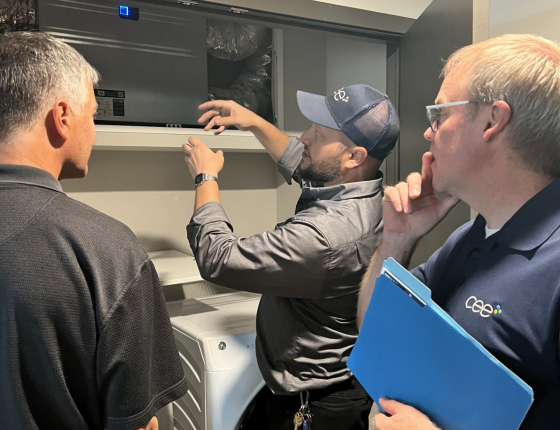
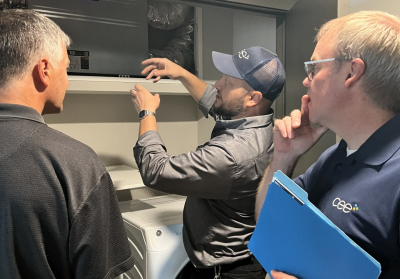
When planning began on a new building for the Native American Community Clinic (NACC), the scope of the project — a sustainable multi-use apartment housing and clinic facility on Native American owned land in Minneapolis — was a large undertaking that would require funding coordination and logistical cooperation between several building and operating partners. New goalposts and challenges, like adding a geothermal system to the site and the elimination of Inflation Reduction Act (IRA) funding, meant this process would be even more intensive. During a recent tour of the space just prior to NACC’s reopening, we had the opportunity to see how the team overcame those hurdles and exceeded expectations to bring this remarkable facility to fruition.
On the tour, NACC Executive Director Antony Stately explained that the emphasis on making the building as sustainable to operate as possible was twofold. Practically speaking, keeping energy and operating costs low for residents and the clinic was vital for long-term success. Most housing units in the building are designated for people at 50% area median income or below — inefficient heating and cooling systems with high monthly bills would overburden residents. Antony also highlighted the cultural importance of incorporating environmentalism into the project, to uphold the Native American tradition of respect for the land.
Housing Financing Partners
- United Health
- Cinnaire
- Greater Minnesota Housing Fund
- MnCIFA
- City of Minneapolis
- Hennepin County
- Met Council
- MN Housing
- Pohlad Foundation
- Xcel Energy
- CenterPoint Energy
Construction Partners
- Collage Architects
- Cain Thomas Associates
- Frana Companies
- Darcy Solutions Geothermal
- Midwest Mechanical Solutions
- Harty Mechanical
This focus on energy efficiency led the construction team to incorporate a Darcy geothermal system, which would be routed to provide extremely efficient heating and cooling energy to heat pumps in each unit of the apartment complex and the entire clinic. Because geothermal systems harness groundwater, which remains at a relatively stable temperature during the coldest parts of winter, this energy source does not exact the same efficiency penalties that an air source heat pump experiences when outside temperatures drop below zero. This means that heat pumps in the building can operate efficiently and affordably all year.
While geothermal can offer substantial energy, maintenance, and bill savings over time, the upfront cost to include a geothermal system in new construction is significant. While the construction team needed to address this multi-million dollar added cost, they also had to overcome funding gaps left in the wake of the elimination of federal IRA rebates. By working with the Greater Minnesota Housing Fund and other financing partners, the team was able to pool additional financing to bridge the gap in the budget. Minnesota State Representative Patty Acomb was one of several legislators and staff who attended the tour — Rep. Acomb noted that revolving loan funds designated by the state legislature could help make more building projects like this a reality.
CEE’s New Homes team also played a key role in energy modeling the apartments to help meet the rating requirements, performing field inspections and testing to ensure energy efficiency measures were installed properly, and completing final certifications to meet the funding requirements. In addition to the geothermal-powered heat pumps, each apartment unit was outfitted with an energy recovery ventilator (ERV), something rarely done in apartment complexes. These ERVs not only increase the energy efficiency of each unit, they also significantly improve indoor air quality by bringing in fresh outdoor air and exhausting stale indoor air, providing residents with greater comfort and quality of life in their homes. CEE’s New Homes team performed the necessary testing to certify the building for the DOE Efficient New Homes program (formerly known as DOE Zero Energy Ready Homes).
We are honored to be part of and to showcase unique sustainable buildings projects like the Native American Community Clinic. This work epitomizes CEE’s mission: to deliver effective energy solutions that strengthen the economy and help our communities become more efficient, sustainable, and equitable. We know from experience that navigating the challenges and barriers to sustainable building requires coordination across builders, architects, HVAC professionals, policymakers, clean energy advocates, funding agencies, and more. We hope that sharing stories like the NACC’s will inspire more action and partnership across the industry.