On July 1, 2026, Xcel Energy will file the first Gas Integrated Resource Plan in Minnesota. In 2023, the Minnesota Public Utilities Commission (PUC) began a proceeding to establish requirements for natural gas integrated resource plans for CenterPoint Energy, Minnesota Gas, Xcel Energy, and Minnesota Energy Resources Corporation (MERC). These new requirements stem from extreme cold events that caused significant gas demand increases and large spikes in natural gas prices. Natural gas resource planning aims to determine “the mix of energy resources that best protects ratepayer and public interests, maintains safe, reliable and affordable service, and advances state policy moving forward” (MN PUC). These energy resources can include supply-side approaches like gas capacity and storage, as well as expanded adoption of energy efficiency and air source heat pumps. Given these upcoming filings, it is valuable to understand existing long-standing regulatory proceedings that natural gas utilities and the PUC use to evaluate and manage the natural gas utility system. These include demand entitlement, purchased gas adjustments, and gas utility infrastructure cost riders.
What is demand entitlement? What is design day?
A demand entitlement is a contract between a gas utility and interstate pipeline that outlines how much supply of gas the utility is going to need. A Petition for Change in Contract Demand Entitlements is a filing that gas utilities in Minnesota must submit to the PUC on an annual basis to request changes to the contracted gas capacity allotted to the utility. Contract demand entitlements can include changes in interstate pipeline transportation, storage entitlements, and supply contracts.
One of the metrics used to determine necessary gas capacity that is encompassed within a demand entitlement is a design-day requirement. The design-day model is used to calculate theoretical peak gas use. A design day is the forecasted highest possible amount of gas demand needed or the gas necessary to be supplied under the most extreme conditions on a singular day. Updating demand entitlement contracts ensures that customers’ needs are met at a reasonable cost in all scenarios. Increases in design-day requirements signal increases in demand-related needs and costs.
Demand entitlement trends
According to demand entitlement data over the last ten years from Minnesota’s primary gas utilities, CenterPoint Energy, Xcel Energy, and MERC, total design-day requirements have continually increased. MERC’s design-day requirement has increased 21% from 2015 to 2025, CenterPoint Energy’s design day requirement has increased 17% since 2015, and Xcel Energy’s requirement has increased 10%. One factor driving this growth, which both the PUC and utilities discuss in their filings, is an increase in the number of customers that utilities serve.
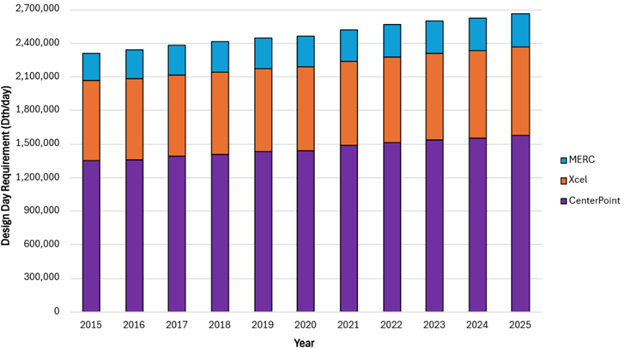
Figure 1. Annual design-day requirements of Minnesota gas utilities
What are PGAs?
Another fluctuating factor that utilities must plan for is the cost of gas. Utilities don’t make money on the gas customers use, so the amount utilities pay for natural gas is passed through to customers. Changes to the cost of natural gas due to fluctuations in the market are reflected in the Purchased Gas Adjustment (PGA). The PGA accounts for the utility costs of purchasing gas and transporting it through their distribution pipeline system for delivery to customers. PGAs allow utilities to adjust rates between rate cases, as the cost of natural gas fluctuates with the market. PGA rates change monthly and appear as a cost-of-gas line item on customer bills.
PGA trends
Filings from the primary three gas utilities in Minnesota show the fluctuating trends of natural gas prices over the last 10 years. This chart shows how gas prices change over time and are growing increasingly volatile compared to historical numbers.
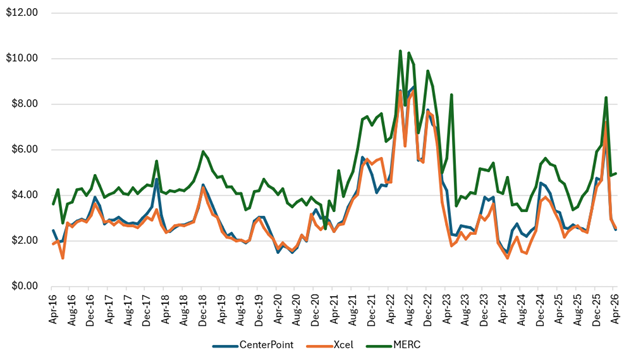
Figure 2. Monthly PGA values from April 2016 to April 2026 by gas utility
What is GUIC?
Another filing that impacts customer bills is the Gas Utility Infrastructure Cost (GUIC) rider. GUIC is a rate rider that allows utilities to recover costs for specific projects defined in statute that are not currently associated with the company's base rates. The GUIC rider can be used for projects that are required by federal, state, or local government entities, such as public road construction and relocation, Transmission Integrity Management Programs (TIMP), and Distribution Integrity Management Programs (DIMP) projects. All include some type of replacement or modification of existing natural gas facilities or infrastructure. The cost of GUIC-related projects is factored in customers' gas bills.
GUIC trends
Data from the last six years of GUIC Annual Residential Surcharge Bill Impacts show that after 2023 there was a decrease in the reflection of GUICs onto residential customers' bills. Though the value seems to be on the rise in 2025, it is still low relative to total gas bill costs. GUIC costs fluctuate depending on how much the utility is investing in gas infrastructure that year. Unlike demand entitlement and PGAs, CenterPoint Energy does not file GUIC Riders. The following table shows the average amount that is added to residential customer gas bills every month, by year, from GUIC projects for Xcel Energy and MERC.

Table 1. Average monthly GUIC bill impacts of Minnesota gas utilities
PUC and State of MN Authority
The PUC must review and approve demand entitlement changes, PGA, and GUIC filings. In demand entitlement orders, the PUC considers forecasting of design day levels, proposed entitlements, proposed PGA cost recovery, and more. In GUIC Orders, the PUC considers the GUIC true-up, revenue requirement, surcharge rates, and rate factors. The PUC makes the final decision but receives recommendations from reports prepared by the Minnesota Department of Commerce (DOC). The DOC reports include discussion on design day forecast and requirements, proposed overall demand entitlement levels, the PGA cost recovery proposals, and more, based on their analysis. The DOC analyzes the true-up report, revenue requirement, and surcharge rates in GUIC filings.
Conclusion
Design-day values in demand entitlement dockets can indicate whether a utility’s necessary gas capacity to provide safe and reliable service is increasing or decreasing in the long term. As customer demand changes, resources deployed to meet customer demand must also change. When PGA and GUIC costs fluctuate, customers will pay more or less for the gas supply and infrastructure they use. As utilities, the PUC, and stakeholders prepare for upcoming Gas Integrated Resource Plan filings, it is important to understand the realities and trends presented in existing gas regulatory proceedings. This will help identify, assess, and advocate for solutions to meet the broad goals of effective gas planning.