Whether you just purchased your first home or you’ve done this before, buying a home can be daunting. There are a lot of things to figure out, from logistics to care and beyond. If you’re looking for actionable ways to take care of your home and make it safer, more comfortable, and more energy efficient, this guide can help.
Four areas that affect your home's efficiency
Your home is a system, with each component playing its own part in energy efficiency. Understanding how the system works and how your decisions influence it can help you better care for it. This article shares some of the basics of how to make your home as healthy, safe, durable, and efficient as possible.
Start with health and safety
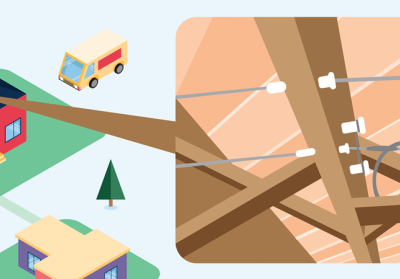
Protecting your health and safety should be a top priority in your home. It’s important to understand potential environmental hazards or risks from deferred maintenance that can arise in your home, so you can start to mitigate risks and keep your loved ones healthy and safe. Some of the concerns that are common in older Minnesota homes include knob and tube wiring and radon, among others. Addressing health and safety concerns is a strong first step when you move into a new home, because it lays a strong foundation for future projects, including future energy efficiency upgrades.
Your home's structure: Foundation, roof, and attic
Another set of activities you can complete before you move on to other energy efficiency projects is to check on your home’s structure. Ensuring your foundation, roof, and attic are in good shape can go a long way in ensuring your home is well sealed against the elements and not sustaining damage over time. A combination of DIY activities and contractor actions can keep your structure healthy and safe for occupants.
Weatherization and ventilation
Following health and safety, we recommend checking your home’s weatherization and ventilation, which helps your home stay at a more consistent temperature without drafts, hot spots, or other discomfort. This also helps ensure your mechanical systems will not need to work too hard to maintain your set temperature, because it’s not compensating for air leakage. Weatherization is one of the best ways to improve your home’s energy efficiency.
The two main components of weatherization are air sealing and insulation. Insulation helps buffer the outside temperatures, keeping conditioned air inside and unconditioned air outside. Air sealing closes any small holes, gaps, or other leaky areas of the home, like where vents lead outside, which does the same.
After your home is better sealed, you’ll want to revisit your ventilation system. Sometimes, the small air leakage that exists in a home helps to ventilate it, and sealing those gaps can create moisture control issues or air quality issues. If you seal them with air sealing, you’ll need to add back a new form of ventilation. Continuous ventilation is one way to do this while also reducing any mold risks. These systems exhaust indoor air at a slow rate determined by your home’s airtightness.
HVAC tune-ups and seasonal maintenance
To keep all your home’s systems operating at their best, following a home maintenance checklist is recommended. For some systems, like your heating and cooling systems, you’ll need a technician to visit your home to complete an HVAC tune-up with inspection. Other systems, like your kitchen and bath fans, will only need a thorough clean.
Taking the next step on energy efficiency
Still feeling overwhelmed? There are some helpful next steps that you can take to maintain or improve your home’s energy efficiency, and several resources are available to help you answer your questions.
Home energy assessment
If you’ve had a home energy assessment, your follow-up report will outline areas of energy loss in your home, provide potential energy efficiency solutions, and offer a clear picture of how to start these projects.
If you have not had a home energy assessment, a professional energy auditor can assess the energy efficiency of your home and recommend projects to make your home more efficient and comfortable.
Many utilities offer low- and no-cost energy audits to customers. If you’re a CenterPoint Energy or Xcel Energy customer in Hennepin, Ramsey, or Washington Counties, or in Dakota County without CenterPoint Energy gas, your energy audit will be performed by Center for Energy and Environment. If you live in Dakota County with CenterPoint Energy gas, another Minnesota county, or North Dakota, ICF will complete your energy audit. If you live in another state or have another utility provider, check with your utility provider to see if they offer a whole-home energy assessment.
Home inspection reports
If you had an inspection when you bought your home, your home inspection report may have some information on projects that could help your home perform at its best.
If you live in Minneapolis, a Truth in Sale of Housing (TISH) inspection was conducted on your home. If you live in Bloomington, your home had a Time-of-Sale (TOS) Housing inspection. Starting in January 2020 in Minneapolis and April 2022 in Bloomington, both types of inspections included additional information on energy efficiency features in the home. This part of the report, called the energy disclosure report, will help you understand the efficiency of your mechanicals, windows, and insulation, which can help you plan for future projects, like mechanical replacements.
Trusted contractors
One proactive step you can take to reduce stress when issues arise is researching trusted contractors. Contractors that can help with common issues in the home include plumbers, heating, ventilation, and air conditioning (HVAC) technicians, electricians, chimney sweeps, handyperson services, and pest control contractors. If you’ve had an energy audit recently, you may have access to follow-up support that can make recommendations, too.
Get started today
Caring for your home doesn’t need to be overwhelming. Taking time to understand what’s happening not just in your living spaces but in the hidden spaces, like your attic and foundation, will help you make informed, confident decisions on your home’s maintenance and energy efficiency upgrades. Need help getting started? Get a home energy assessment to get efficiency advice from a professional.
Resources
If you want to learn more about these topics, here are some resources to explore to better understand your new home!
Healthy Homes Minnesota — MN Dept. of Health