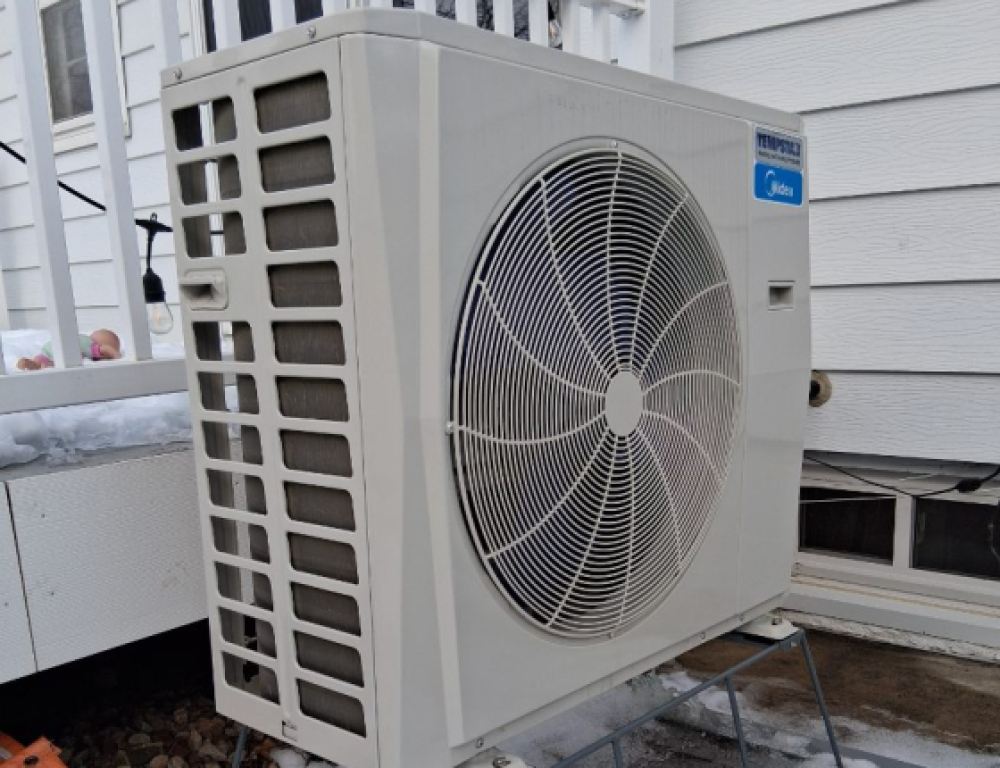
Minnesota Department of Commerce has announced grants to Center for Energy and Environment and its partners totaling $2,719,849 for 10 multiyear research projects that CEE will either lead or serve as subcontractor. In total, the Department’s Division of Energy Resources announced funding of $5.6 million for 21 projects in its 2026 cycle of Conservation Applied Research and Development (CARD) grants, including the 10 affiliated with CEE.
The funding for CEE spans a dynamic and timely array of technologies and energy efficiency practices that have the potential to help Minnesota meet its ambitious decarbonization goals while lowering bills for residents and businesses. Research project scopes include analyzing duct performance to optimize heat pump installations; using smart valves to produce energy savings for commercial buildings; electrification heating potential in barns; maximizing heat pump operation in the coldest conditions; retaining radiators with compatible air-to-water heat pumps; a guide for successful residential heat pump water heater installation; field-testing newer heat pump products in multifamily buildings and hotels; and recommendations for electrical panel servicing and upgrades.
CARD grants have a long history of helping Minnesota’s energy utilities identify promising technologies and strategies to maximize energy savings, improve the effectiveness of energy conservation programs, or document decarbonization resulting from energy conservation projects. The projects provide utilities with key information to improve relevant program designs or create new programs in their conservation portfolios. CEE’s past and current CARD-funded projects have informed our strategic program design and delivery, as well as our policy approach, uniting building science principles, findings in the field, and energy efficiency services to reduce carbon emissions and lower costs for all Minnesotans.
The following details all 2026 CARD projects affiliated with CEE. Each grant total represents the full amount awarded to the project lead, including lesser funds to be paid to subcontractors. CEE will lead work on the first eight projects listed and is subcontracted on the final two.
Note: CEE regularly self-funds a significant portion of its research budget to supplement competitive grants. For these 12 projects, CEE and its research associates will pay for research elements not covered by CARD, adding 5%–10% to the grants listed to cover total project costs
FUNDED WORK
Heating Load Estimates and Duct Performance Diagnostics for Successful ASHP Retrofit Installations
- Grant total: $308,392 over 24 months
- Project team: CEE (lead)
This project will conduct load calculations and duct performance measurements in out-state 1–4 unit residences, complementing the results of a current Twin Cities study. The results will inform recommendations for load-estimating methods for homeowners, auditors, and contractors.
Smart Control Valve Energy Savings for Chilled Water HVAC Systems
- Grant total: $458,565 over 36 months
- Project team: CEE (lead), with subcontractor Slipstream
As smart control valves are uncommon in Minnesota, this field project will address the lack of awareness and adoption by generating and disseminating quality field data and case studies demonstrating the energy, cost, and carbon savings impact of smart valves.
Beneficial Electrification for Better Barns
- Grant total: $307,571 over 24 months
- Project team: CEE (lead)
This market study will estimate the potential benefits of using heat pumps to heat, cool, or produce hot water in dairy, swine, and turkey farms in Minnesota. The project team will engage livestock farmers and heat pump manufacturers to identify opportunities and barriers for realizing efficient fuel-switching measures.
Modern ASHP Performance in the Coldest Conditions
- Grant total: $385,507 over 30 months
- Project team: CEE (lead)
This field study will update and improve the field-validated performance maps of modern residential air source heat pumps (ASHPs) at temperatures below 0°F. The data generated from this study will then be leveraged to calculate the impacts of increasing cold weather performance on annual savings, peak loads, and best design practices.
Evaluating Retention of Existing Radiator Distribution Systems for Cost-Effectiveness
- Grant total: $230,684 over 24 months
- Project team: CEE (lead)
This project will focus on the compatibility of air-to-water heat pumps (AWHPs) as a competitive technology that can significantly benefit underserved communities with limited incomes seeking to electrify boiler-heated homes. The project team will evaluate the potential to retain existing radiators when installing electrified AWHP HVAC systems by characterizing the relationship between their heating load and the designed capacity of their heat emitters.
A Practical Guide for Successful HPWH Implementation in Minnesota
- Grant total: $69,198 over 12 months
- Project team: CEE (lead), with subcontractor Slipstream
Residential heat pump water heaters (HPHWs) have undergone extensive technical advancement over the past 10 years. This project will close the gap between long-standing negative HPWH assumptions and data which proves their efficacy and cost-effectiveness in Minnesota homes.
Vertical Packaged Heat Pump Field Study in Multifamily and Hospitality Buildings
- Grant total: $427,605 over 35 months
- Project team: CEE (lead)
Multifamily and hospitality buildings that use ducted forced-air systems for space conditioning often rely on natural gas for heating. These building types present a strong opportunity for electrification through heat pumps. This field study will assess several heat pump alternatives that are new to the market, focusing on general market barriers, system performance and operation, energy and cost savings, and occupant satisfaction.
Recommendations for Minnesota Residential Electrical Services to Enable Electrification
- Grant total: $66,089 over 18 months
- Project team: CEE (lead)
The project team will gather existing data on electrical service and panels in single-family detached homes in Minnesota and compare their current conditions against electrification requirements to determine when and to what extent upgrades and changes are necessary for electrification projects.
Heat Pump Water Heaters for Retrofits with Space and Electrical Constraints
- Grant total: $396,256 over 19 months
- Project team: Slipstream (lead), with subcontractor CEE
This field study will evaluate best practices and use cases for installing split heat pump water heaters (HPWHs), with a particular focus on space-constrained applications such as mobile and manufactured homes and low-rise multifamily buildings. The study will also assess the cold-climate performance of split-style systems with outdoor condensers across these application types.
Energy Savings from Dual Fuel Controls Optimization across Minnesota
- Grant total: $69,982 over 19 months
- Project team: Slipstream (lead), with subcontractor CEE
This project will produce a whitepaper on optimizing dual fuel heat pump control schemes to maximize energy and cost savings, modeling these impacts across Minnesota's residential building stock. The project will produce actionable guidance for consumers, contractors, manufacturers, distributors, and program managers to consider control scheme tradeoffs in their dual fuel system designs.
Read the press release from Minnesota Department of Commerce
ABOUT CEE
CEE seeks a healthy, carbon-neutral economy that works for all people. A 501(c)(3) clean energy nonprofit with nearly 40 years' experience in energy efficiency, we align our strategies behind technical research, program development and implementation, community engagement, policy advocacy, and project financing. Working across homes, businesses, and communities, CEE discovers and deploys the most effective energy solutions to improve the environment and strengthen the economy for everyone.
MEDIA CONTACT
Tim Hanrahan, thanrahan@mncee.org