Choosing the Best Water Heater System
We explain what to look for in a new water heater to help you save in the future.
A typical home in Minnesota uses about 15% of its total energy on heating water. Having a water heater that’s suited to your home and lifestyle will mean less wasted energy and lower energy bills.
To maximize your cost savings when replacing a water heater, it’s best to wait until your old one needs to be replaced. Most water heaters last between 10 and 12 years, so upgrade opportunities are good opportunities to plan for what you’ll want in the next decade. If your water heater is getting old, planning a replacement now can also help avoid rushed or costly decisions later.
How does a water heater work?
A water heater uses a power source to heat water to a set temperature. Most water heaters use natural gas, propane, or electricity to bring the water to temperature, and most homes have a water heater tank that holds 40–50 gallons of hot water, but larger households should install bigger water heaters to account for increased demand.
Storage water heaters have a large tank that heats and stores water. These are the most common types of water heaters. Cold water enters at the bottom of the tank and gets heated, that temperature is maintained using the fuel source, then hot water is pulled from the top of the tank when needed, allowing more cold water to enter to repeat the cycle. Tankless water heaters only heat the water as it’s needed, which reduces the amount of energy needed to maintain a set temperature. Heat pump water heaters (HPWHs) combine the efficiency of a tankless water heater with the capacity and speed of a storage tank water heater. Because they combine components of storage tank and tankless water heaters, HPWHs are also called hybrid water heaters.
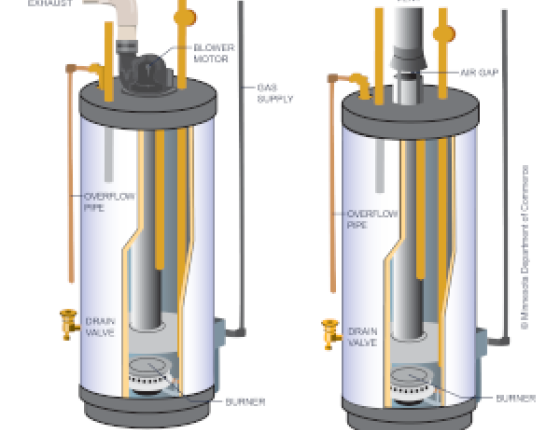
When it’s time to replace your water heater, CEE recommends choosing one that is efficient. If you install an electric or heat pump model, you will not need to consider its combustion. If you opt for a gas- or propane-fired water heater, make sure you install a sealed combustion model.
How efficient is my water heater?
A water heater’s efficiency is rated using Uniform Energy Factor (UEF), which is the industry standard measurement of how much energy is used to heat water and how much energy is wasted, such as by heating the surrounding air or the equipment itself. UEF ratings replaced Energy Factor (EF) ratings in 2017, so your water heater may use either measure. For a more in-depth explanation of UEF, read this article from Energy Star.
High-efficiency traditional water heaters may have a UEF of 0.64–0.95, meaning that 64%–95% of the energy used by the water heater is spent on heating water and the remaining 5%–36% of that energy is wasted. By comparison, a HPWH may have a UEF of 3.3–4.1 because they are using the heat energy in the surrounding air to move heat, rather than generate it. The higher your new water heater’s UEF is, the more efficient it will be. You may also be able to get rebates from your utility or City government for installing a more efficient water heater.
What's a sealed combustion water heater?
When a gas- or propane-fired water heater operates, it burns fuel to heat the water. That combustion process leaves behind byproducts like water vapor and carbon monoxide. The gases are supposed to leave the home through a vent that sits above the water heater and leads outside, but sometimes that air can leak back into the house where it can negatively affect occupant health and indoor air quality. That process is called appliance gas spillage. A sealed combustion water heater only uses outside air to operate, eliminating the potential for spillage.
Choosing a sealed or power-vented natural gas or propane model can address these risks, or you can choose an electric or heat pump model to eliminate combustion and spillage concerns entirely while reducing your home’s carbon footprint. Electric and heat pump water heaters don’t require venting at all, which also makes them a more flexible option.
How much does a water heater cost?
The type of water heater that best suits your needs will depend on your home and water heating needs. Installing a power-vented, gas-fired water heater typically costs about $4,000. An electric resistance water heater costs about $4,000. A HPWH costs about $6,500. Operating costs will vary, but electric resistant water heating can be more expensive than other methods. Beyond the financial implications, keep in mind that electric resistance and heat pump water heaters can reduce your home’s carbon footprint and improve health and safety for occupants.
Outside resources

Questions about your home energy? Let's talk!